Top Online Health and Safety Courses in Saudi Arabia with Recognized Certificates
Online Health and Safety Courses Saudi Arabia If you’ve spent any time job-hunting on Bayt, LinkedIn, or Naukrigulf for a safety role in the Kingdom, you’ve already noticed the pattern — almost every listing for a safety officer, HSE coordinator, or site supervisor asks for the same thing: a recognized health and safety certification. Not a certificate of attendance. Not an in-house training badge. A qualification that HR and clients in Riyadh, Jeddah, Dammam, and NEOM will actually accept.
That’s exactly why demand for online health and safety courses in Saudi Arabia has grown so quickly over the past few years. Saudi’s construction boom, Vision 2030 megaprojects, and stricter enforcement from the General Organization for Social Insurance (GOSI) and municipal authorities mean employers can no longer treat safety training as optional paperwork. They need people on site who genuinely understand risk assessment, hazard control, and compliance — and they need proof of it.
This guide walks through the courses worth your time and money, what each one actually prepares you for, and how to pick the right path whether you’re starting out as a safety officer or moving into a management-level HSE role. We’ll also touch on courses for professionals based in the UAE and wider Gulf region, since many companies operate across both markets and ask for the same certifications on either side of the border.
Why Employers in Saudi Arabia Are So Strict About Certification
Construction, oil and gas, and manufacturing remain the backbone of the Saudi economy, and all three sectors carry real physical risk. Regulators have responded by tightening site inspection rules, and contractors bidding on government and Aramco-linked projects are increasingly required to show that their safety staff hold internationally recognised qualifications.
In practice, this means a health and safety awareness course alone won’t get you far if you’re aiming for a supervisory or officer-level position. It’s a good starting point for general staff, but hiring managers for dedicated safety roles are usually looking for something more structured — which is where courses like NEBOSH, IOSH, and OSHA-aligned programs come in.
Safety Officer Course in Saudi Arabia — Where to Start
Most people entering the field ask the same question first: what’s the fastest, most respected route into a safety officer course in Saudi Arabia? There are a few tiers worth knowing about:
- Foundation-level awareness training — covers basic hazard identification, PPE use, and site safety rules. Good for new entrants or non-safety staff who need a working knowledge of the topic.
- Safety officer diploma/certificate programs — structured courses covering risk assessment, incident reporting, permit-to-work systems, and emergency response. These are the qualifications most job postings actually name.
- International certifications (NEBOSH, IOSH, OSHA) — the gold standard for anyone serious about a long-term HSE career, especially on multinational or Aramco-linked projects.
If your goal is to work as a safety officer on a construction or industrial site, plan your route as: awareness training → officer-level certificate → an international qualification like NEBOSH IGC once you have some site experience behind you.
NEBOSH Safety Course in Saudi Arabia — Still the Industry Benchmark
Ask any HSE manager in the region which qualification carries the most weight, and NEBOSH usually tops the list. A NEBOSH safety course in Saudi Arabia — particularly the NEBOSH International General Certificate (IGC) — is recognised by employers across the Gulf, the UK, and internationally, which makes it one of the safest long-term investments you can make in your career.
NEBOSH IGC covers:
- Managing health and safety
- Risk assessment and control
- Workplace hazards (physical, chemical, biological, and psychosocial)
- Practical assessment based on a real workplace inspection
Because NEBOSH certificates are internationally portable, they’re a smart choice if you think you might work across Saudi Arabia, the UAE, or Qatar at some point in your career — one qualification, recognized everywhere.
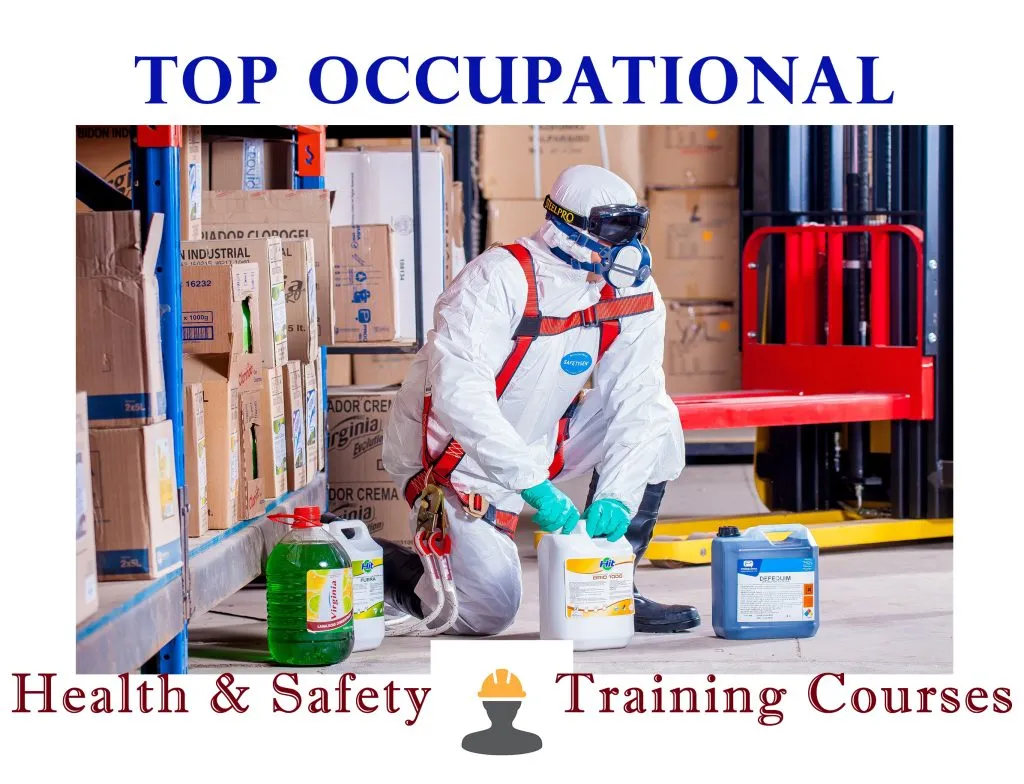
Occupational Health and Safety Courses for Every Career Stage
Not everyone needs the same depth of training. Occupational health and safety courses generally fall into three practical categories:
- Awareness and induction courses — short courses for general staff, often required before starting work on a construction site.
- Occupational health and safety training courses for supervisors — mid-level programs focused on managing teams, conducting toolbox talks, and enforcing site procedures.
- Management-level qualifications — a full health and safety management course, such as NEBOSH’s management-track units or IOSH Managing Safely, designed for people responsible for setting policy and overseeing compliance across a project or organisation.
Picking the right tier matters. Enrolling in a management-level course before you’ve had any site experience can leave you under-prepared for the practical assessments, while sticking only to awareness training will cap your career progression.
Construction Health and Safety Courses — A Priority Sector in Saudi Arabia
With giga-projects like NEOM, Qiddiya, and the Red Sea developments driving enormous demand for skilled labour, construction health and safety courses are arguably the single most requested category of training in the Kingdom right now.
These courses typically cover:
- Scaffolding and working-at-height safety
- Excavation and confined space hazards
- Heavy machinery and lifting operations
- Permit-to-work systems specific to construction sites
- Emergency evacuation planning for large sites
If construction is your target sector, pair a general safety qualification with sector-specific modules — such as working at height or confined space entry — so your certificate matches exactly what site managers are asking for.
Environmental Health and Safety Courses
Sustainability requirements are becoming a bigger part of Saudi’s industrial landscape, particularly for companies working toward ISO 14001 compliance or bidding on projects with environmental clauses attached. Environmental health and safety courses combine traditional occupational safety training with modules on waste management, pollution control, and environmental risk assessment — a genuinely useful combination if you want to stand out from candidates who only hold a standard safety certificate.
Is There a Free Safety Course in Saudi Arabia?
It’s a fair question, and the honest answer is: yes, but with caveats. You’ll find a free safety course in Saudi Arabia here and there — usually short awareness modules offered as taster content or basic induction training. These are worth doing if you’re brand new to the field and want a feel for the material before committing money to a full qualification.
What they won’t do is replace a recognised certificate on your CV. Employers hiring for safety officer or HSE roles are checking for accredited qualifications, not free completion certificates, so treat free courses as a starting point rather than a destination.
Online Health and Safety at Work Training Courses — Do Employers Accept Them?
Yes, and increasingly so. Online health and safety at work training courses have become the norm rather than the exception, particularly for professionals already working full-time or based outside major cities. The key is choosing a provider whose certification is recognised by the accrediting body itself, not just badged as “online-friendly.” A properly delivered online course — with proctored exams or practical assessments where required — carries the same weight as classroom-based training.
This is also good news if you’re based in the UAE or elsewhere in the Gulf but want a Saudi-recognised qualification: most reputable online safety courses in Saudi Arabia are accessible from anywhere in the region, so relocation isn’t a prerequisite for getting certified.
How to Choose the Right Health and Safety Certification Course
With so many health and safety certification courses on the market, a quick filter helps:
- Is the awarding body internationally recognised? (NEBOSH, IOSH, and OSHA-aligned bodies are the safest bets.)
- Does the course match the job level you’re targeting? Don’t over- or under-qualify for the role you actually want.
- Is there a practical or assessed component? Employers value courses that test real understanding, not just attendance.
- Can you verify the certificate? Reputable training providers offer certificate verification tools so employers can confirm authenticity.
Final Thoughts
Saudi Arabia’s safety training market has matured fast, and that’s a good thing — it means a recognised certificate genuinely opens doors rather than just ticking a box. Whether you’re starting with a foundational health and safety awareness course, working toward a safety officer course in Saudi Arabia, or aiming for a full NEBOSH safety course in Saudi Arabia, the most important step is matching the qualification to the career stage you’re actually at.
At WSP UK, we deliver internationally recognized health and safety training alongside fire safety training courses, first aid training courses, and environmental health and safety courses — all designed for professionals across Saudi Arabia, the UAE, and the wider Gulf. If you’re weighing up construction-specific training, our other qualifications page covers additional safety and compliance courses like confined space entry, working at height, and manual handling — useful add-ons if you’re building a construction-focused HSE career.
Want guidance on which course fits your goals? Contact our course advisors for a free consultation, or explore becoming a certified master trainer if you’re looking to deliver safety training yourself.
Frequently Asked Questions
1. Which is the best safety course to start a career in Saudi Arabia?
Most people start with a general health and safety awareness course, then move into a safety officer-level certificate once they have some practical exposure. From there, an international qualification like NEBOSH IGC significantly boosts your prospects.
2. Is NEBOSH recognized in Saudi Arabia?
Yes. NEBOSH certifications are widely recognized by employers in Saudi Arabia, particularly in construction, oil and gas, and industrial sectors, and are also accepted across the UAE and other Gulf countries.
3. Can I complete a health and safety course online and still get a recognized certificate?
Yes, provided the course is delivered by an accredited provider. Look for programs with proctored exams or practical assessments, since these carry the same recognition as classroom-based training.
4. Are there free safety courses available in Saudi Arabia?
Some free awareness-level courses exist and are useful for beginners, but they don’t replace an accredited certification. Employers hiring for safety officer or HSE positions typically require a recognized qualification.
5. How long does it take to complete a safety officer course?
This varies by course level — awareness training can take a few days, while a full safety officer certificate or NEBOSH IGC program typically takes several weeks, depending on whether you study part-time or full-time.
6. Do I need construction-specific training if I already hold a general safety certificate?
If you’re targeting construction sites specifically, yes — pairing your general certification with modules like working at height, confined space entry, or scaffolding safety makes your profile much stronger for site-based roles.