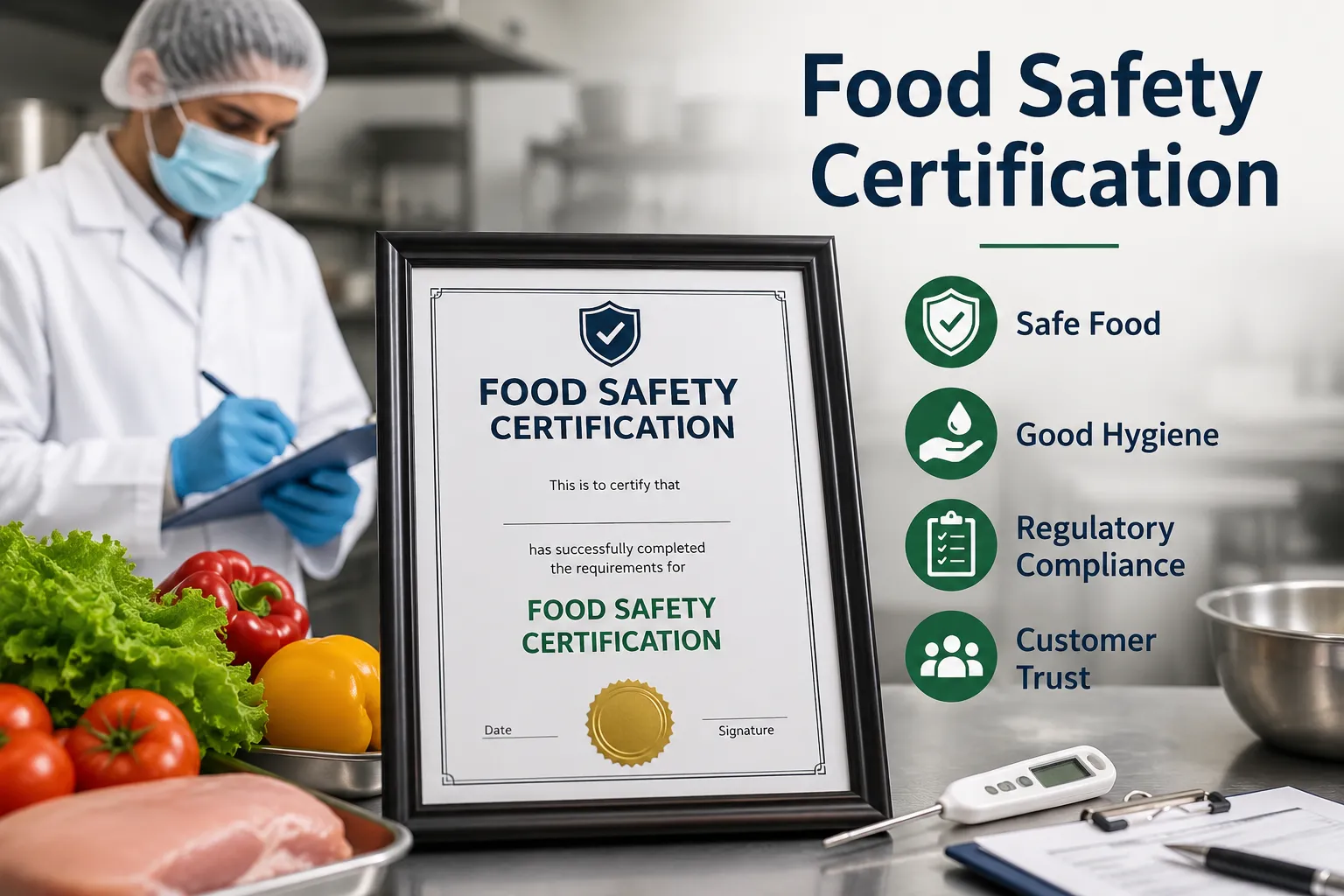
Food Safety Certification: Why Every Food Business Needs It
There is a great responsibility that is associated with owning a food business. Consumers expect the food they buy to be safe for consumption, properly prepared, and handled hygienically. From any restaurant, café, take away or catering business, bakery, food truck or food manufacturing company, it’s important to keep your food safety standards high to ensure both your customers and your reputation are safe.
Food safety in the UK is not only a legal obligation, it’s also a responsibility. It is essential for establishing customer trust and confidence, minimizing health risks, and ultimately securing the success of the business. One event of food contamination could ruin a company’s reputation, result in financial losses and even result in legal action. That’s why getting a food safety certification is one of the single most valuable investments a food business can make.
Food safety training is often thought to be a requirement only for those working in the kitchen. Actually, all those involved with food handling, preparing, storing, transporting, and supervising food should know the principles of food hygiene. Training is important as it enables employees to identify hazards, minimize contamination and work in a safe manner.
With the changing rules and regulations relating to food, customers are now more aware of hygiene and food safety standards. They want to feel confident that businesses they patronize are food safety conscious. A food safety certification is a valuable asset for any business or organisation committed to professionalism and compliance, and can help them meet industry expectations.
This guide will look into the significance of food safety certification, the various tiers of food safety training and the advantages of acquiring the appropriate food safety certification for employees and employers.
What Is Food Safety Certification?
Food safety certification is an official document to show that an individual has knowledge on food safety, food handling process and the food safety regulations. These are certifications meant to provide food handlers and managers with the knowledge to prevent food borne illness and to prepare food in a safe environment.
Successfully passing a recognized training course and assessment may lead to a food hygiene certificate being awarded. The certification verifies the individual’s knowledge of the most essential points of food safety such as preventing contamination, personal hygiene, temperature control, cleaning and legal responsibilities.
Food safety qualifications are well recognised throughout the food industry in the UK and are often mandatory in the workplace for food handlers, kitchen staff, supervisors and managers.
The importance of food safety in all food businesses
Food safety covers all aspects of the food supply chain from procurement to customer service. Food handling errors can have serious consequences – even minor ones!
Food hygiene practices can result in:
- Food poisoning outbreaks
- Customer complaints
- Poor hygiene inspection results
- Business closures
- Financial penalties
- Reputational damage
For businesses operating in competitive markets, maintaining excellent food hygiene standards is essential. Customers are more likely to return to establishments they trust, while negative publicity related to food safety issues can be difficult to overcome.
By investing in food hygiene training, businesses can reduce risks and create a culture where food safety is everyone’s responsibility.
Understanding Food Hygiene and Food Safety
Although the terms are often used interchangeably, food hygiene and food safety are not exactly the same.
Food hygiene focuses on practices that prevent food contamination. This includes personal cleanliness, handwashing, cleaning procedures, and safe food handling methods.
Food safety is a broader concept that includes food hygiene as well as risk management, hazard control, storage procedures, temperature monitoring, and compliance with food regulations.
Together, food hygiene and food safety form the foundation of safe food operations.
Benefits of Obtaining a Food Safety Certification
Many businesses view certification as a compliance requirement. However, the benefits extend far beyond meeting regulations.
Improved Customer Confidence
Consumers are increasingly aware of food safety standards. Knowing that staff have completed a recognised food and hygiene course can reassure customers that food is being prepared safely.
Better Regulatory Compliance
Food businesses must comply with UK food safety laws and local authority requirements. Certification helps employees understand their responsibilities and reduces the likelihood of violations.
Reduced Risk of Foodborne Illness
Proper training equips staff with practical knowledge to prevent contamination and maintain safe food handling practices.
Enhanced Professional Development
Employees who complete food hygiene training gain valuable skills that can improve career opportunities within the hospitality and food sectors.
Stronger Business Reputation
Businesses that prioritise food safety often enjoy better customer reviews, stronger loyalty, and increased trust within their communities.
Food Hygiene Certificate Levels Explained
Food safety training is available at different levels depending on job roles and responsibilities.
Level 2 Food Hygiene Certificate
The Level 2 Food Hygiene Certificate is one of the most popular qualifications in the UK food industry.
It is designed for individuals who handle food as part of their daily work, including:
- Kitchen assistants
- Chefs
- Waitstaff involved in food preparation
- Catering assistants
- Food retail workers
A food hygiene course level 2 typically covers:
- Food contamination risks
- Personal hygiene
- Food storage
- Temperature control
- Cleaning and sanitation
- Food safety legislation
Many employers consider the food safety level 2 qualification a minimum requirement for food handlers.
Level 3 Food Hygiene Certificate
The Level 3 Food Hygiene Certificate is intended for supervisors, managers, and team leaders responsible for overseeing food safety systems.
This advanced qualification covers:
- Food safety management
- Hazard analysis
- Risk assessment
- Legal responsibilities
- Staff supervision
- Food safety procedures
A Level 3 Food Safety and Hygiene qualification provides a deeper understanding of food safety management and is particularly valuable for those responsible for compliance.
Many restaurant managers, catering supervisors, and food business owners choose to complete a Level 3 Food Hygiene Certificate to strengthen their knowledge and leadership capabilities.
Food Safety Training and UK Legal Requirements
Food businesses operating in the UK have a legal responsibility to ensure that food is safe for consumption. While the law does not always specify that employees must hold a particular qualification, it does require that staff receive appropriate food safety training based on their job responsibilities.
The Food Standards Agency (FSA) and local authorities expect food handlers to understand food hygiene principles and apply them in their daily work. Businesses that fail to maintain proper standards can face enforcement action, poor hygiene ratings, fines, or even closure in serious cases.
Food safety training helps businesses demonstrate that employees have received the knowledge needed to perform their duties safely and responsibly.
How to Get a Food Hygiene Certificate
One of the most frequently asked questions is, “How do I get a food hygiene certificate?”
The process is relatively simple and accessible for most learners.
Step 1: Choose the Right Course
Select a course that matches your role and responsibilities.
For example:
- Food handlers typically require a Level 2 Food Hygiene Certificate
- Supervisors and managers often benefit from a Level 3 Food Safety and Hygiene qualification
Step 2: Complete the Training
Training can be completed either online or through classroom-based learning.
Most courses include modules covering:
- Food contamination
- Foodborne illnesses
- Personal hygiene
- Cleaning and sanitation
- Food storage
- Temperature control
- Legal requirements
Step 3: Pass the Assessment
At the end of the course, learners usually complete an assessment to demonstrate their understanding.
Step 4: Receive Your Certificate
Successful candidates receive a recognised food hygiene certificate that can be presented to employers or regulatory authorities when required.
Benefits of an Online Food Hygiene Course
Modern learning platforms have made food safety education more accessible than ever.
An online food hygiene course offers several advantages for both businesses and employees.
Flexible Learning
Learners can study at their own pace and complete training around work schedules.
Cost-Effective Training
Online courses often reduce travel and accommodation costs associated with classroom training.
Immediate Access
Training materials can be accessed from almost anywhere with an internet connection.
Consistent Learning Experience
Every participant receives the same structured information and assessment process.
For businesses managing multiple employees, food hygiene training online can be an efficient way to maintain compliance while minimizing operational disruption.
Why Food Safety Training Is Essential for Employees
Food safety is not solely the responsibility of managers. Every employee who handles food plays a role in protecting customers.
Proper food safety training helps employees understand:
- Safe food preparation techniques
- Correct storage procedures
- Personal hygiene requirements
- Cross-contamination prevention
- Cleaning responsibilities
- Temperature monitoring
Training also helps build confidence. Employees who understand food safety principles are more likely to identify potential hazards and take corrective action before problems occur.
Common Food Safety Risks in the Workplace
Food businesses face numerous potential hazards that can compromise food quality and safety.
Cross-Contamination
Cross-contamination occurs when harmful bacteria are transferred from one surface, food item, or person to another.
Examples include:
- Using the same chopping board for raw and cooked foods
- Poor handwashing practices
- Improper storage arrangements
Incorrect Temperature Control
Food must be stored, cooked, and served at safe temperatures.
Failing to maintain temperature controls can encourage bacterial growth and increase the risk of foodborne illness.
Poor Personal Hygiene
Employees must maintain high standards of personal cleanliness.
Simple practices such as handwashing, wearing clean uniforms, and reporting illnesses play a significant role in food safety.
Inadequate Cleaning Procedures
Regular cleaning helps eliminate harmful bacteria and maintain a safe working environment.
Without proper cleaning schedules, contamination risks can increase rapidly.
Choosing the Right Food Safety Course
With numerous training providers available, selecting the right course is important.
When comparing options, businesses should consider:
Course Recognition
Ensure the qualification is recognised within the UK food industry.
Level of Training
Choose a course that matches employee responsibilities.
Delivery Method
Decide whether online or classroom-based learning best suits your needs.
Practical Relevance
The training should provide real-world examples and practical guidance rather than focusing solely on theory.
Certification
Verify that successful learners receive a recognised certificate upon completion.
Who Needs Food Safety Certification?
Food safety certification is beneficial for a wide range of professionals.
These include:
- Chefs
- Kitchen assistants
- Restaurant staff
- Caterers
- Food delivery businesses
- Bakery employees
- Food retailers
- School kitchen workers
- Care home catering teams
- Food manufacturing staff
Managers and supervisors may also benefit from advanced qualifications such as Level 3 Food Safety to strengthen their leadership and compliance knowledge.
Building a Strong Food Safety Culture
Food safety should not be treated as a one-time training exercise.
Successful businesses create a workplace culture where food safety is part of everyday operations.
This can be achieved by:
- Providing regular refresher training
- Encouraging staff participation
- Conducting routine inspections
- Reviewing procedures regularly
- Addressing issues promptly
- Recognising good food safety practices
When employees understand the importance of food hygiene and feel responsible for maintaining standards, businesses are more likely to achieve consistent compliance.
The Long-Term Value of Food Safety Certification
Investing in food safety certification provides benefits that extend well beyond legal compliance.
For businesses, certification can help:
- Improve customer trust
- Strengthen brand reputation
- Reduce operational risks
- Support staff development
- Demonstrate professionalism
- Improve inspection outcomes
For employees, qualifications can enhance employability and create opportunities for career progression within the hospitality and food industries.
In a sector where customer confidence is essential, demonstrating a commitment to food safety can provide a valuable competitive advantage.
Conclusion
One of the most critical tasks for any food business is food safety. From a small café, to a busy restaurant, catering, or a large food production business, high food hygiene standards are essential to the protection of your customers and your reputation.
A recognised food safety qualification provides staff with the necessary knowledge and understanding of their responsibilities and to ensure consistent risk management and adherence to the UK Regulations to minimise the risk of food being contaminated. The appropriate level of training – from Level 2 Food Hygiene Certificates for food handlers to Level 3 Food Safety and Hygiene qualifications for managers – can have a big impact on business performance and compliance.
A food safety investment is the path to meeting regulatory requirements, as well as to building a safer environment, gaining customer trust, and ensuring long-term success. .
Frequently Asked Questions
1. What is a food safety certification?
A food safety certification is a recognized qualification that demonstrates knowledge of food hygiene, food handling, and food safety practices.
2. Is a food hygiene certificate required in the UK?
While the law requires appropriate food safety training, many employers expect staff to hold a recognized food hygiene certificate.
3. What is Level 2 Food Hygiene?
Level 2 Food Hygiene is a qualification designed for food handlers who prepare, cook, store, or serve food.
4. What is Level 3 Food Hygiene?
Level 3 Food Hygiene is aimed at supervisors and managers responsible for overseeing food safety procedures.
5. How long does a food hygiene course take?
Course durations vary, but many online Level 2 courses can be completed within a few hours.
6. Can I get a food hygiene certificate online?
Yes. Many recognized providers offer online food hygiene courses and assessments.
7. Who needs food safety training?
Anyone involved in food preparation, handling, storage, transportation, or supervision should receive appropriate food safety training.
8. What is covered in a food safety course?
Topics typically include food contamination, personal hygiene, temperature control, cleaning procedures, and food safety legislation.